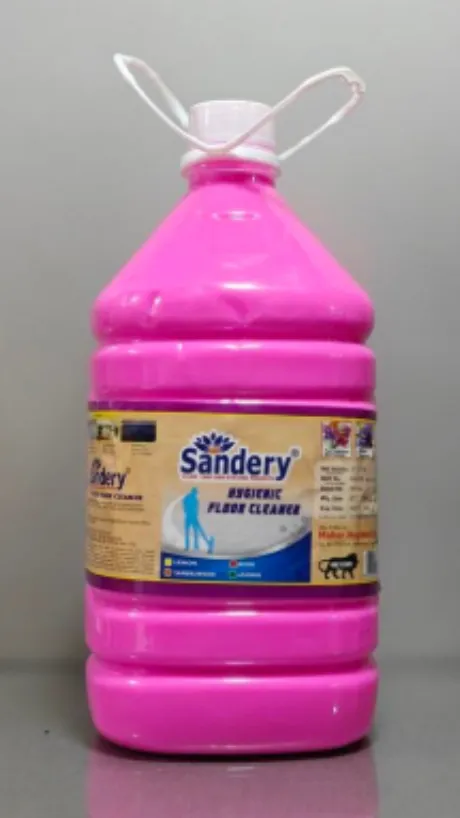
Commercial facilities increasingly need cleaning programs that are organised, repeatable, and appropriate for different spaces. Floors in entrances, washrooms, corridors, kitchens, waiting areas, and workspaces do not necessarily have identical hygiene requirements.
When evaluating a Floor Cleaner Disinfectant Supplier, facility managers should therefore look beyond fragrance and pack price.
Cleaning and Disinfection Are Different Functions
Cleaning primarily removes dirt, debris, and unwanted residues from surfaces.
Disinfection involves using an appropriate product according to its directions for reducing specified microorganisms on suitable surfaces.
The distinction matters because a floor that looks visually clean is not automatically disinfected. Likewise, simply adding more chemical does not guarantee improved disinfection.
Where disinfection is required, buyers should check the product's intended use and follow its specified directions carefully.
Start With the Facility's Risk Areas
Not every floor necessarily requires the same procedure.
For example, cleaning requirements may differ across:
- Hospital waiting areas
- Office corridors
- Hotel lobbies
- Restaurant back-of-house areas
- Institutional washrooms
- High-traffic entrances
A facility should first identify where ordinary cleaning is sufficient and where its hygiene protocol calls for additional measures.
Check Surface Compatibility
An effective product still needs to be appropriate for the flooring material.
Ask the supplier about intended applications and always follow label guidance. Particular attention may be necessary for specialised flooring or sensitive finishes.
Testing an unfamiliar product on a small inconspicuous area can also be prudent where surface compatibility is uncertain.
Evaluate Usage Instructions
Clear directions are especially important when housekeeping work is performed by multiple employees or outsourced teams.
Buyers should understand:
- Recommended dilution
- Application method
- Required contact time where applicable
- Rinsing instructions
- Handling precautions
- Storage requirements
If employees cannot understand how to use the product consistently, even a suitable formulation may produce inconsistent outcomes.
Look Beyond Per-Litre Pricing
Commercial procurement should focus on usable value.
Suppose Product A costs less per litre but requires considerably more concentrate for each bucket. Product B costs more but has a lower recommended dose.
Comparing only container prices would give an incomplete picture.
Calculate approximate cost per prepared litre or per cleaning cycle instead.
Supply Continuity Matters
Facility management companies often maintain multiple properties. Running out of a standard cleaning product can force teams to substitute unfamiliar products at short notice.
Before selecting a supplier, assess:
- Normal order quantities
- Pack-size availability
- Replenishment capability
- Lead times
- Consistency of supply
- Commercial order handling
This becomes increasingly important as the number of sites grows.
Pune Facilities Have Diverse Requirements
A corporate office in Pune may require scheduled daily floor maintenance, while a hospital or hospitality facility may operate cleaning teams across extended hours. Restaurants and institutions create another set of requirements.
For buyers across Pune and Maharashtra, proximity to the supply network can help simplify replenishment, particularly for products consumed continuously.
ROHO CARE PVT. LTD serves the cleaning and hygiene products segment from Pune. Commercial customers comparing providers can assess the company alongside other suppliers using objective criteria such as product suitability, usage information, packaging, and order support.
Use a Trial Before Standardising
Where practical, commercial facilities can test a product in a controlled area before introducing it throughout the property.
Track:
- Cleaning results
- Consumption
- Staff feedback
- Surface appearance
- Dilution accuracy
- Ease of handling
A short operational trial provides more useful information than choosing solely from a product catalogue.
Supplier evaluation is ultimately about reliability as much as product availability. A suitable floor-care program combines appropriate chemistry, correct application, trained housekeeping staff, and predictable procurement.
Keywords